Species: Scoliopteryx libatrix
Species: Scoparia biplagialis
Species: Scopula inductata
Subfamily: Sterrhinae
Species: Scopula limboundata
Hodges: 7159
Flight Period: June - Early September
Wing Span: 20-31mm
Peterson: 201
Hosts: Apple, bedstraw, blueberry, meadow beauty, dandelion
Field Notes: A species with a wide range of forms (dimorphism). We suggest you look at many images from within the group before logging this one into your database. The last week in June and the first few weeks in July can be an explosive time for the large lace-borer moths. On July 10th we tallied 23 individuals scattered around our survey lamp by 10:30 pm. This moth can stick around right through into September. Always be aware of it, as one of its many iterations can pop-up late in the season to throw you a curve ball. The genus Scopula worldwide is huge - the latest count is 800 species. Here's a little nature tidbit from the Moth's and Caterpillars of the North Woods, 2009, Sogaard, "Asian Scopula species visit vertebrate eyes, feeding on tears and mucous, perhaps for sodium or protein. At least 30 species of eye-frequenting moths are suspects in transmission of diseases that affect humans and others that affect livestock.". Remind me to wear safety glasses the next time fire-up the survey lamp!
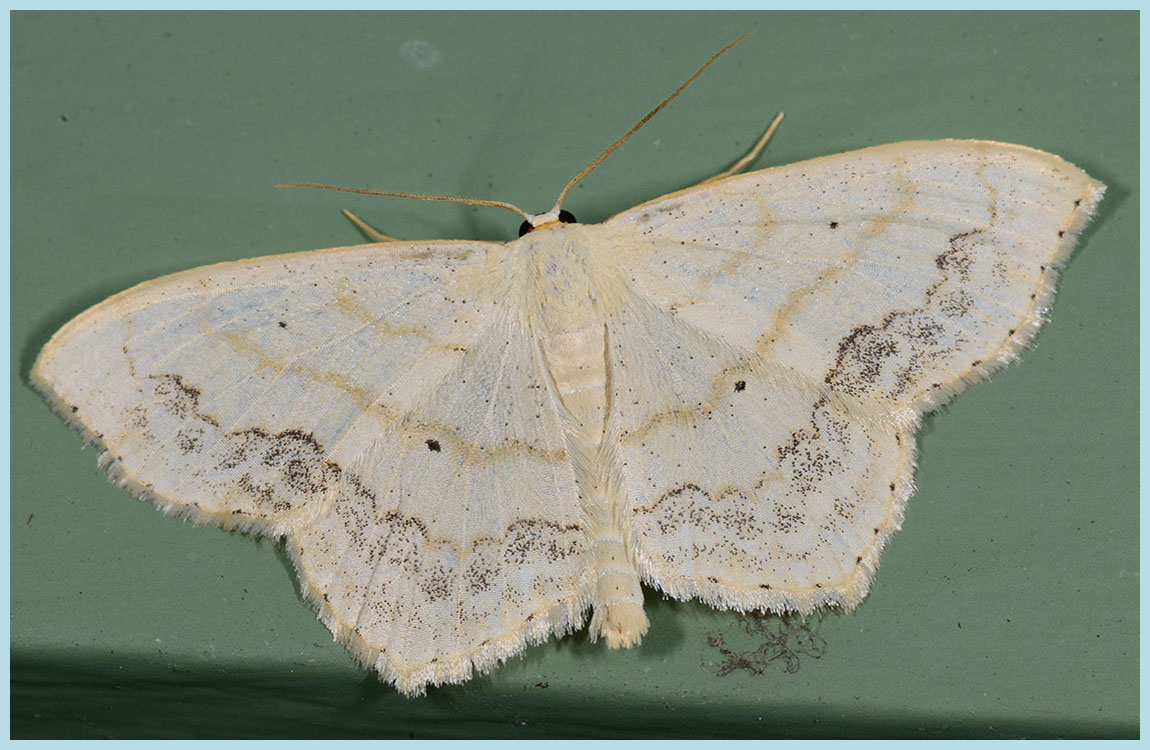
Dorsal Views

Alternate Form © Lee Ruth
Species: Simyra insularis
Hodges: 9280
Flight Period: April - Mid September
Length: 20-22mm
Peterson: 405
Hosts: Cattail, grasses, sedges, smartweed, popular, willow
Field Notes: This species is also known as the "Marsh Dagger". Noting the larval host plants above its no wonder why this moth is found in Troy Meadows. Look for it anywhere the habitat exhibits an interface between marsh and field. These ecotones are abundant at Troy Meadows so it is likely that this Marsh Dagger is as well. The wood grain appearance of this species is diagnostic. This species caterpillar are often parasitized by braconid wasps
Species: Sitochroa palealis
Species: Smerinthus jamaicensis
Species: Spargaloma sexpunctata
Species: Sparganothis distincta
Tribe: Spargonothidini
Species: Sparganothis sulfureana
Hodges: 3695
Flight Period: June - Octobe
Length: 10mm
Peterson: 103
Hosts: Generalist of Trees and Plants - Pine, cranberry, corn, willow, clover, apple
Field Notes: X Marks the spot with this 10mm micro moth. The larvae will typically roll the leaf on to itself for protection. These moths can at times cause problems for the agricultural industry - just one more insect used as an excuse to douse our fruits and vegetables with pesticides. This moth can be abundant during its peak emergence period - Late July in Troy Meadows.
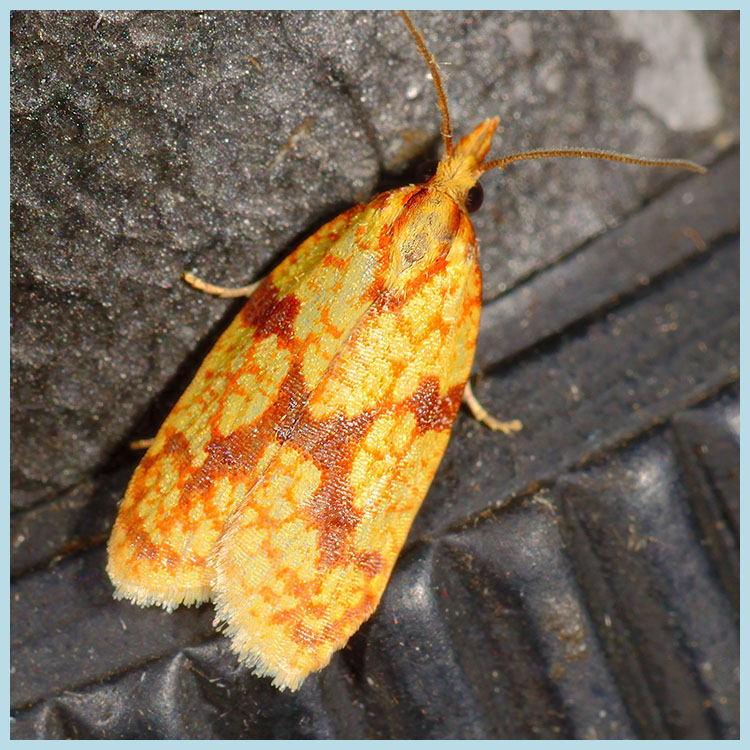
Dorsal View
